90% of travelers crowd into less than 10% of the world’s map, leaving vast, meticulously drawn spaces far from the frenzy and collective selfies. The time for limitless multiplication is over: imposed quotas, restricted access, and nature returns closed for several months all contribute to easing the pressure of mass tourism and limiting its ecological and human ravages.
Yet, going against the tide, collectives and local residents are opening new horizons far from clichés and predictable crowds. They are forging paths of a different kind, intended for those who want to give substance to their adventure, understand what they are experiencing, and adopt genuine respectful practices. Authenticity is not consumed; it is built, far from plasticized folklore, in the surprise of a conversation or a good detour.
Why exploring lesser-known destinations can transform your view of travel
Traveling differently does not rely on a catchy slogan or advertising promises. It is a direct, concrete commitment in the face of the visible excesses of industrial tourism. When lines stretch in front of monuments and amusement parks, there are more than 650 parks open to the public in France alone, some travelers prefer to veer off and give new meaning to their journey. Respect for locals, care for the territory, support for those who live there: this is the compass for charting new routes, where the desire to discover is combined with the desire to act wisely.
Venturing onto less frequented paths is a way to emancipate oneself from uniformity. Imagine a village in Central Europe that guides have forgotten, an unknown valley in the Caucasus, or an African beach spared from real estate frenzy. This choice lightens the carbon footprint of travel, but more importantly, it fosters genuine exchanges. One no longer skims the surface; one lingers. Communities, unaccustomed to seeing foreigners, share their daily lives without filters. Moments hold surprises, the encounter of meaning.
This way of traveling is not limited to a single path. Several complementary currents deserve attention:
- ecotourism,
- solidarity travel,
- slow travel,
- rural or participatory tourism
Each approach signals a need to slow down, to root oneself, to choose real contact over the frenzy of “seeing it all.” Sometimes, it all starts with a simple click to discover the Panorama du Monde website, a rare resource for uncovering untouched corners. Here, tranquility, experimentation, and the sincerity of exchange are prioritized.
Which preserved landscapes and cultures deserve to be discovered off the beaten path?
Landscapes that strike and cultures that transform do not express themselves in passing, nor at the rhythmic pace of tour operators. Take Mongolia: silence here becomes language. The horizon has nothing to prove. A night under the yurt, an improvised meal with a nomadic family, disrupts the certainties brought back from Western comfort.
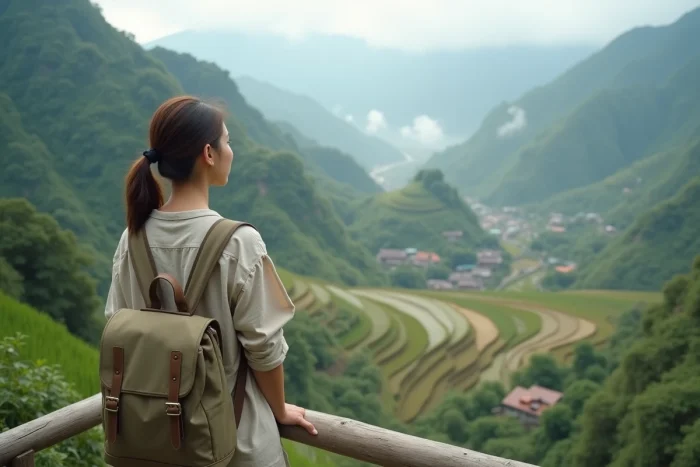
From Zambia to Togo, nature displays itself unabashedly. The great parks of Tanzania, the rice fields of Vietnam, or the pristine forests of Madagascar still keep tourist fever at bay. Taking the time to go there is to grant oneself the right to understand without consuming. In Uzbekistan or Laos, rural tourism regains its meaning: local markets, small farms, artisan workshops open their doors to those seeking something other than pre-packaged souvenirs.
In the Philippines, fishing villages display solidarity at every turn. Indonesia organizes stays where forest preservation is as important as respecting the locals. These projects tell a life lived first and foremost on-site, for those who live there, and embody a true sharing, without folklore or caricature.
| Destination | Distinctive Experience |
|---|---|
| Nepal | Village hiking, cultural immersion |
| Uzbekistan | Discovery of crafts and rural heritage |
| Laos | Agricultural life, preserved traditions |
Alternative tourism, in all its forms—ecotourism, solidarity, slow, participatory—helps rediscover the unprecedented behind every exchange. One leaves a little different, with eyes opened to others.

Guides, readings, and resources for traveling differently and responsibly
Relearning to travel also means changing tools. Gone are the impersonal brochures: committed guides focus on the human aspect, prioritize ethics, and reveal vibrant territories. Some books, straddling narrative and manifesto, propose to slow down the pace even further, choose the train instead of the plane, experiment with cycling, or even hit the road on a whim. Traveling by van or walking for days fits into the same logic: reconnecting with natural cycles, rediscovering long time.
Here are some concrete alternatives for preparing an off-the-beaten-path stay:
- Eco-responsible accommodation: committed guesthouses, eco-lodges off major routes, agro-ecological farms, or homestays give full meaning to immersion. House exchanges, like HomeExchange, are based on trust, reciprocity, and a genuine desire to share.
- Soft transport: prioritizing trains, carpooling, and cycling encourages slowing down while fostering encounters and the unexpected. These are ways that limit the travel footprint and invite a change in perspective on distances.
- Documentary resources: reading narratives voiced by locals, engaging with works that question the link between discovery, preservation, and economic dynamics, opens many more doors than a standardized brochure.
Multiplying experiences, sailing from eco-volunteering to local cooperation, is to break free from old models to build a unique journey. These resources nourish an adventure that takes its time, leaves a trace, and embeds fragments of the world in memory that are impossible to confuse.