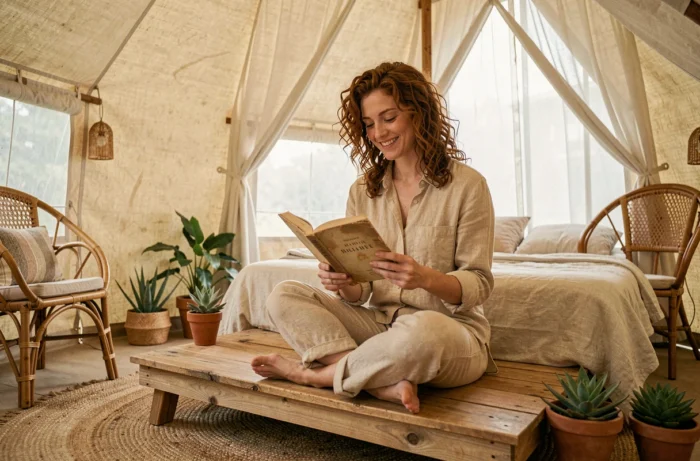
When preparing a trip off the beaten path, the question of accommodation arises even before that of the destination. A bed in a Mongolian yurt or a room with a local in Morocco is not booked like a night in a hotel in Paris. The type of accommodation influences the budget, the pace of the stay, and the quality of encounters on site.
Regulatory constraints to check before booking alternative accommodation
Since law n° 2024-1039 of November 19, 2024, French municipalities can reduce the maximum rental duration of a primary residence from 120 to 90 days per year. This measure directly affects travelers who rely on short-term rental platforms to find unique accommodations.
In parallel, tourist rentals must now present a minimum energy performance certificate in municipalities subject to usage change authorization. Properties classified as F and G will gradually be excluded starting in 2028, followed by E in 2034. In practical terms, some listings for renovated cabins or rural guesthouses may disappear from platforms if owners do not undertake renovations.
The other point to monitor concerns taxation. Since 2025, the economic model for unclassified tourist rentals has become less favorable. For travelers, this means that classified accommodations (labeled gîtes, certified eco-lodges) tend to offer better value for money than unregistered rentals, which can be explored via the accommodation section on the Alternative Travel site to compare available options.
Staying with locals: what it really changes in travel
Staying with locals is not just about renting a cheaper room. You share a living space, sometimes a kitchen, often breakfast. This cohabitation alters the relationship to place and time.
Formats that work depending on the destination
Couchsurfing remains free but requires flexibility: you don’t always choose the dates, and comfort varies. Labeled guesthouses offer a more predictable setting, with a host present who knows the area. Between the two, house swapping allows for travel without accommodation costs, provided you agree to open your own home.
Feedback varies on this point: some travelers appreciate the total immersion, while others find cohabitation tiring after a few nights. The key is to alternate. Two nights with locals followed by a night independently in a gîte helps maintain a good balance.
- Couchsurfing: suitable for flexible solo travelers, with a verified profile and reviews available before the stay request
- Guesthouse: ideal for couples or families wanting a local anchor without sacrificing comfort, often with personalized advice about the surroundings
- House swapping: relevant for stays of a week or more, with significant savings on the total travel cost
Eco-lodges and nature accommodations: beyond the decor
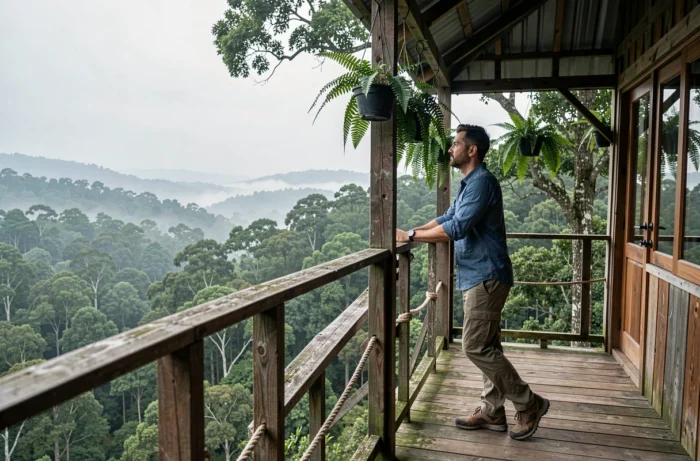
We see many transparent bubbles and treehouses on social media. The visuals attract, but the quality of an eco-lodge is measured by its insulation, water system, and waste management, not by its photogenicity.
A well-designed eco-lodge incorporates bio-sourced materials, produces part of its energy, and operates on a short supply chain for dining. Those that settle for a “nature” label without concrete commitment often provide a disappointing experience once on site: poorly maintained dry toilets, insufficient heating in mid-season, difficult access without a car.
Concrete criteria to distinguish a true eco-lodge
- Presence of an official classification (classified tourist rental, recognized environmental label) that guarantees a minimum level of energy performance
- Transparency about sourcing: accommodation that mentions its local suppliers and sorting practices is more likely to keep its promises
- Accessibility via soft mobility: the best eco-lodges are connected to a trail, a train station, or a carpooling network
Alternative accommodation budget: where the real savings are
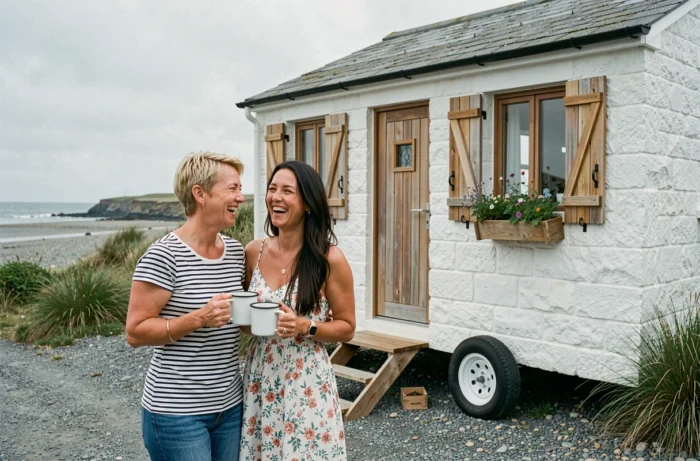
Alternative accommodation is not always cheaper than a hotel. A bubble with a private spa in high season can sometimes cost more than a three-star hotel in the city center. The difference lies in the length of stay and what is included in the overall budget.
House swapping eliminates the accommodation expense, which often represents the first or second largest expense of a trip. Couchsurfing does the same, but with less predictability. Classified rural gîtes offer a good compromise: a moderate price, a fully equipped kitchen that helps reduce dining costs, and a location often close to natural sites with no entry fees.
On the other hand, unclassified unusual accommodations are affected by the 2025 tax reform, which may lead to price increases to compensate for the reduction in tax benefits for owners. Favoring classified accommodations also protects the traveler’s wallet.
Transport and local anchoring: the logical extension of accommodation choice
Alternative accommodation loses some of its meaning if you arrive by low-cost flight after three connections. Recent trends show a growing preference for soft mobility and short circuits. Choosing a gîte accessible by train, then by bike, transforms the journey into the first step of the stay rather than a logistical constraint.
The choice of transport also influences the type of accommodation accessible. Without a car, one naturally turns to guesthouses in towns or hiking lodges, rather than an isolated cabin in the woods. This practical filter simplifies the search and focuses options on accommodations better integrated into their territory.
The most successful alternative accommodation is one that fits into a local ecosystem: a neighboring producer providing breakfast, an artisan who built the structure, a marked trail starting from the doorstep. It is this coherence between the place, transport, and immediate environment that makes a stay truly memorable.