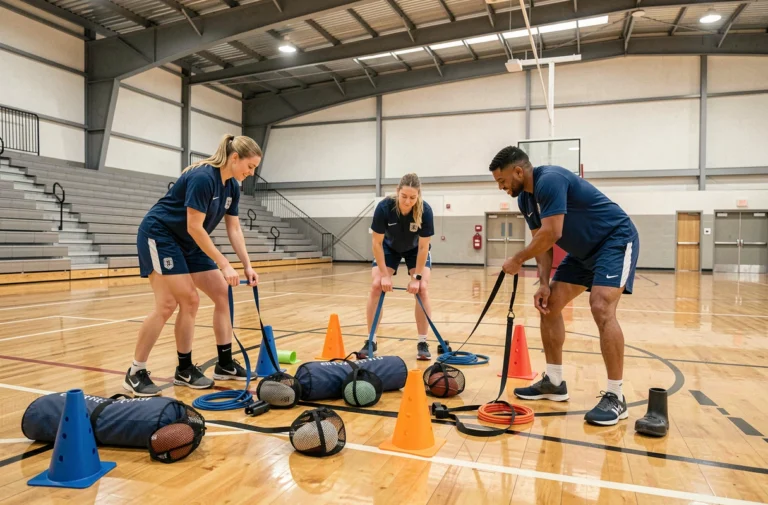
When a Ligue 1 club plays a league match on Sunday, travels for a Nations League game on Wednesday, and then returns to the national pitch three days later, we can concretely measure what the overload of the sports calendar means. The latest sports news confirms an underlying trend: the pace of competitions, integrity rules, and the place of women’s football are reshaping the sports landscape well beyond simple results.
International Football Calendar: The Unique 16-Day Window
Until recently, international breaks fragmented the season into short, repeated interruptions. Clubs lost their players for two matches, recovered a fatigued team, and then started again a few weeks later.
The restructuring adopted in September 2026 changes the game. The isolated October window has been removed in favor of an extended 16-day period encompassing four matches. This shifts from a fragmented calendar to a compact block, reducing the number of interruptions in national leagues.
For a coach like Zidane with the Blues, this concretely means having a real work cycle. Four consecutive matches (against Portugal, Italy, or in the Nations League) allow for the establishment of a tactical system rather than patching things together between two express call-ups. To follow Sport Web’s sports news on these developments, we see that this reform generates as much hope among coaches as it does concern among club fitness trainers.
The flip side remains the physical load. Four matches in 16 days is a pace that not all players can handle the same way. Returns vary on this point: some medical staff believe that the continuous block favors recovery between periods, while others fear an accumulation of muscle fatigue over too short a time frame.
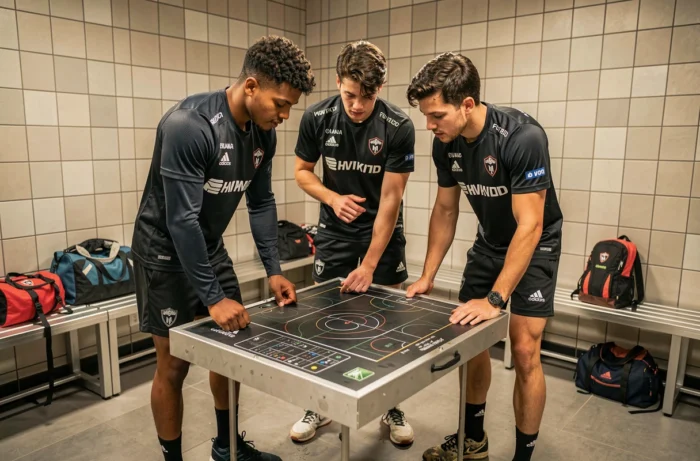
Sports Integrity and Anti-Doping: The New Rules Coming
The mechanisms that protect the integrity of a match are evolving rapidly, under the combined pressure of online betting and stricter regulations.
The World Anti-Doping Code 2027 comes into effect on January 1, 2027. This text will modify control procedures, sanctions, and the management of athletes’ biological data. For federations as well as teams, compliance represents a concrete logistical challenge.
What the New Code Changes for Athletes
The biological monitoring of athletes is already based on the biological passport, but the regulatory framework surrounding it is tightening. Federations must adapt their protocols for collecting, storing, and analyzing samples.
On the ground, this translates to more frequent out-of-competition tests and enhanced traceability. An athlete from the Stade de France or a Paris club can now be tested at any time, including during recovery phases between two Nations League matches.
- The World Anti-Doping Code 2027 imposes new transparency obligations on national and international federations.
- Athletes’ biological data becomes a central tool for regulation, not just a post-facto sanctioning device.
Women’s Sports and Rising Audiences: A Structural Transformation
Audiences for women’s sports are continuously increasing, driven by media coverage that is gradually catching up with that of men’s sports. Broadcasters are dedicating more slots to women’s competitions, and advertisers are following suit.
The virtuous cycle between audiences, sponsors, and investments in infrastructure is beginning to produce measurable effects. It is not the quality of the game that has changed, but the visibility it receives.
The French Team and the Women’s Nations League
In France, the women’s football team is gaining increasing exposure. Matches against Italy or Portugal in European competitions attract an audience that goes beyond the circle of enthusiasts. The women’s Real Madrid, on the club side, has helped normalize women’s football in countries where it was marginal.
For French clubs, the economic stakes are also significant. A women’s match at the stadium that fills half the stands generates ticketing, catering, and merchandising revenues that did not exist five years ago.
Sports Governance: The NIL Framework in the United States
The U.S. Senate passed the Protect College Sports Act on September 28, 2026, a text that regulates the compensation of student-athletes through the “name, image and likeness” (NIL) system.
This text establishes national rules on transfers, scholarships, and medical coverage for college athletes. Its final adoption remains uncertain until the House of Representatives has reviewed it, but the signal is clear: professional sports and college sports are converging towards stricter regulatory frameworks.
What This Means for European Sports
One might think that the NIL only concerns American campuses. The trend to legally regulate the compensation and rights of athletes is also affecting Europe. Discussions on the status of players trained in training centers, on transfer fees, or on social protection for professional athletes fall under the same global movement.
- In Europe, debates on the regulation of agents, image rights, and the governance of federations are intensifying.
- Sports are entering an era of regulation comparable to that of traditional industries.
The coming months will confirm whether these structural reforms (calendar, integrity, governance) permanently change the way we practice, watch, and finance sports. The stakes are now as much in legal texts and biological databases as they are on the fields.