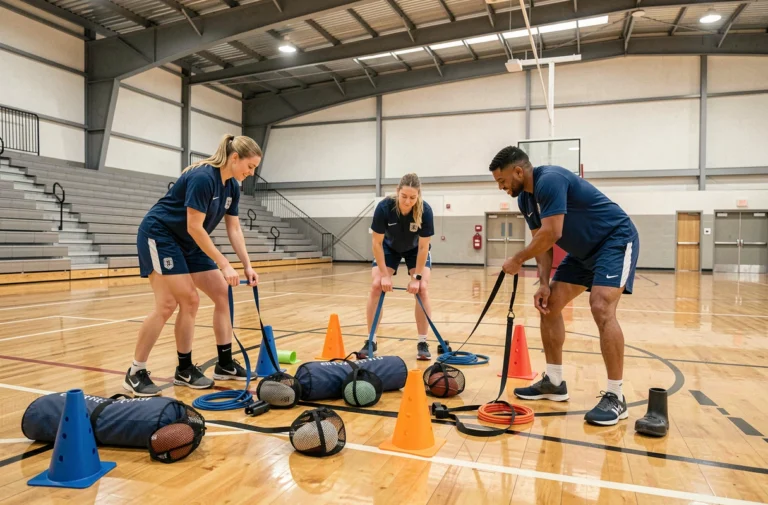
Activity lists that recycle the same entries (sports, cooking, reading) saturate the SERP without ever addressing the real conditions of practice. The choice of a regular hobby relies less on desire and more on three concrete parameters: the time available per session, the proximity of the infrastructure, and the recurring cost. We start from these constraints to identify leisure activities that can be sustained over time.
Logistical barriers to regular leisure: schedules, distance, and recurring costs
Walking remains the most practiced family of activities, and for a structural reason: it depends neither on equipment, nor on a time slot, nor on a dedicated place. As soon as a hobby requires a journey of more than twenty minutes or a monthly subscription, the dropout rate rises from the second month.
The distance from facilities weighs more heavily than a lack of motivation. In suburban areas, accessing a swimming pool, a ceramics workshop, or a climbing gym often requires a car journey. This time commitment, rarely accounted for, transforms a one-hour activity into a two-hour engagement.
The recurring cost is the second filter. A group class in a community center ranges from a modest fee at a community center to a significantly higher rate at a private facility. Before choosing an activity, we recommend calculating the overall annual budget (registration, transport, equipment) rather than just the displayed unit price.
To explore options categorized by theme and format, the leisure activities on the Buzzarium site allow for quick comparisons of various categories without limiting to just sports activities.
Community centers and neighborhood houses: an underutilized network of collective leisure
Neighborhood houses and community centers offer a catalog of practices that is rarely visible on online booking platforms. According to the Observatory of Community Centers, sports activities, dance, wellness, visual arts, and creative hobbies occupy a central place there. The rates, indexed to family quotient, remain among the lowest on the market.

The associative model that supports these structures presents documented fragility. Some community centers have ceased to collectively welcome minors between 2022 and 2024 due to insufficient human resources. This constraint limits the available offerings for families with children, precisely the audience that would benefit the most from accessible rates.
Specifically, a medium-sized community center schedules between eight and fifteen different disciplines per quarter. Registration often occurs in September, with waiting lists for evening slots. Anticipating by a few weeks makes the difference between securing a spot in a pottery workshop and ending up on a supplementary list.
Criteria for choosing an activity in an associative structure
- Check the registration calendar (often only one annual slot, sometimes a catch-up in January) and the refund policy in case of dropout
- Compare the number of participants per session: a workshop with six people and a group class with thirty do not offer the same quality of supervision
- Ensure that the structure has the appropriate accreditation if the activity involves minors, as some community centers have suspended this welcome in recent years
Associative volunteering as a social hobby: flexible formats and occasional commitment
Volunteering has not returned to its pre-pandemic level, according to the 2025 barometer from France Bénévolat and IFOP. This observation does not indicate a lack of interest. It reflects a gap between the formats offered (weekly commitment throughout the year) and the current demand for flexibility.
The associations that recruit most easily are those that offer occasional missions: food distribution on weekends, supervising sports events for a day, sorting clothing donations over a three-hour slot. This “micro-volunteering” format particularly attracts young professionals who do not wish to commit to a fixed schedule.
As a hobby, volunteering ticks several boxes that paid activities do not cover: social connection outside the usual circle, measurable sense of usefulness, and total absence of cost. Occasional commitment works better than an annual commitment to maintain regularity without generating guilt in case of absence.

Accessibility of leisure for people with disabilities
Most articles on leisure ideas completely ignore the issue of accessibility. We observe that accessibility must be evaluated across the entire experience chain, not just on the physical compliance of the location.
An amusement park may display the Tourism and Disability label while posing concrete problems: queues without suitable shaded areas, solely visual signage, staff untrained in welcoming audiences with cognitive disorders. The label guarantees a minimal baseline, not a smooth experience from start to finish.
Checklist before booking an adapted activity
- Contact the structure directly to confirm the actual accommodations (ramp, magnetic loop, support in easy-to-read format) rather than relying on an icon on a booking site
- For organized adapted holidays (VAO), check that the stay has the necessary prefectural approval, mandatory for welcoming adults with disabilities
- Prefer structures that publish a detailed description of their accommodations rather than a simple mention of “accessible for people with reduced mobility”
- Consult feedback on specialized accessibility platforms, which evaluate locations according to finer criteria than general labels
Families with children with disabilities face an additional challenge: activities adapted for children remain concentrated in large urban areas. Outside of Paris and regional metropolises, the offering reduces significantly, which brings us back to the distance problem mentioned earlier.
A leisure activity that lasts over time is not necessarily the one that seems most attractive on a product sheet. It is the one whose location is accessible in less than twenty minutes, whose cost remains manageable over twelve months, and whose format adapts to weeks when time is short. Starting from these three filters before choosing an activity prevents the accumulation of abandoned registrations by November.