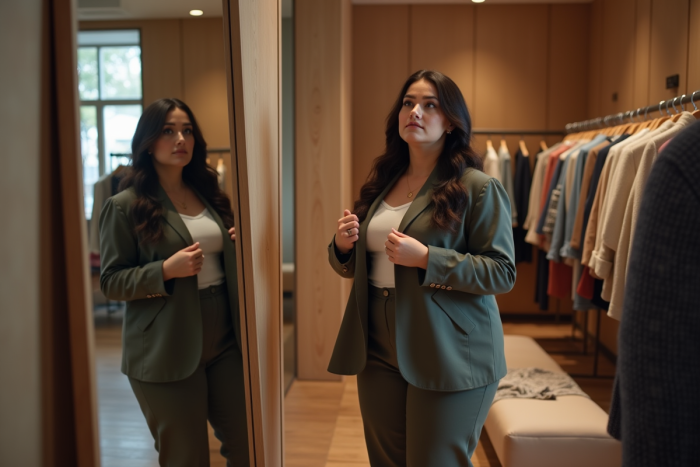
A French size 48 does not always correspond to a European size 48, and this discrepancy persists among many brands. Manufacturers apply different sizing charts, often inherited from standard models that do not take into account morphological variations.
Returns and exchanges online are skyrocketing in this segment, due to the lack of a reliable universal guide. Some brands are trying to expand their range, but adjustments remain limited, complicating the purchasing process.
Why do sizes vary so much from one brand to another?
In plus-size fashion, ambiguity reigns supreme. Each brand charts its own course: internal rules, old habits, manufacturing constraints, all intertwine to create disparate standards. A pattern defined in Paris looks nothing like one from a workshop in Eastern Europe. The tradition of custom tailoring, driven by Alexis Lavigne, has marked France, but globalization has shaken things up. As a result, local morphology often gets overlooked.
Most of the time, production revolves around so-called “central” sizes. The extremes, including plus sizes, are too often neglected. Each brand imagines its own gradations, influenced by fabric measurements, roll widths, or simply industrial logic. This game of discrepancies weighs heavily for those wearing a French size 48 or a European size 50: just a few centimeters, and the garment no longer fits.
To gain efficiency, large chains establish simplified grids, like the famous 2 XL. This highly demanded size crystallizes expectations but also frustrations, as its definition varies according to manufacturers and borders. The absence of a common rule perpetuates confusion. Choosing a plus-size garment that suits one’s morphology then becomes a challenging endeavor. Initiatives to offer sizes truly designed for everyone remain rare, despite a few brands betting on inclusivity and respect for body diversity.
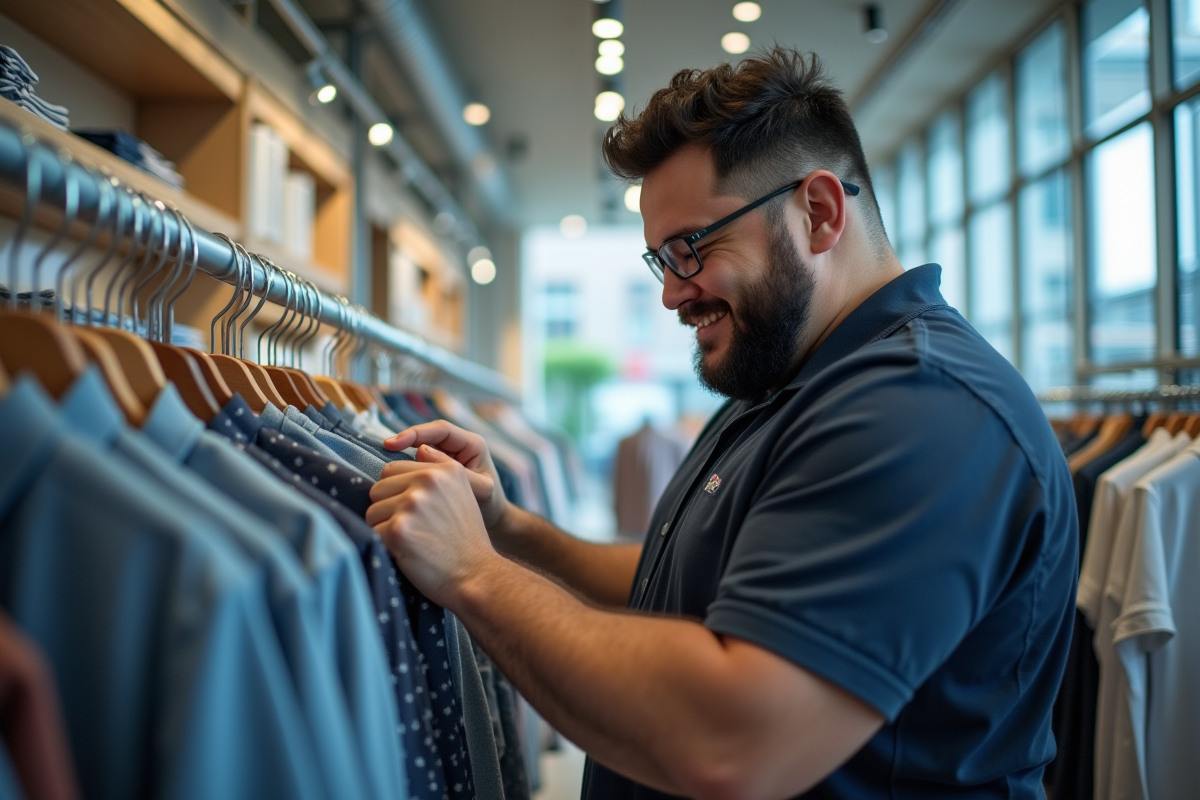
Tips and tricks to finally find plus-size clothing that really fits you
Navigating the plus-size clothing offerings means juggling between various cuts and multiple morphologies. To avoid unpleasant surprises, it’s better to adopt a precise approach. Start by carefully measuring your waist, hips, and bust; these numbers are your best allies against the arbitrariness of sizing charts. Keep in mind that brand size charts mainly serve as guidelines, never as absolute guarantees.
The fabric matters as much as the size. Some materials offer more comfort, especially for plus-size pants. Favor cuts that accompany your movements without ever constraining. Strong seams and clean finishes are signs that do not deceive: durability and quality take on real meaning here, especially if you want to invest in a piece that will last you a long time.
Here are some reflexes to adopt to facilitate your shopping and limit disappointments:
- Always check the size guides provided on product pages.
- Compare your measurements to the actual indications, not to the generic size.
- Trust the reviews of other customers, often precise about the cut and feel of the garment.
The choice of colors also affects your appearance. Select shades that enhance your complexion and match your style. Personalities like Ashley Graham demonstrate that asserting your uniqueness is no longer a luxury. Plus-size fashion is advancing, driven by those who refuse to blend into the crowd. This quest for authenticity challenges the norms but also demands that brands keep their promises.
Choosing the right plus-size garment means refusing compromises. It is about granting yourself the right to demand, at last, fashion that is worthy of all silhouettes.