A cohesive interior depends on technical choices as much as aesthetic ones. The choice of materials, the layout of the space and airflow all work together, with each element influencing the others. Furnishing and maintaining your home means considering these factors as a whole, not in isolation.
Indoor air quality and interior design: an overlooked connection
When renovating or rearranging rooms, attention usually goes first to colors, furniture and lighting. Ventilation often takes a back seat. Yet a better-insulated home with new windows or added partitions may see a significant drop in air exchange.
The practical result: dampness, condensation on windows and premature deterioration of finishes. Paint blisters, wallpaper peels away, and bathroom grout turns black within a few months. Visual harmony falls apart when the air becomes stagnant.
Before choosing a shade for the living room or installing new flooring, check the condition of the extractor vents and air inlets. A clogged or undersized mechanical ventilation system makes any decorative spending in damp rooms pointless. Resources such as Toute La Maison bring together decorating and technical maintenance topics to help you take a holistic approach to interior design.
Colors and materials for a harmonious interior: choose according to the room
A cohesive interior does not come from applying the same palette everywhere. It comes from using a common thread suited to the purpose of each space. A north-facing living room responds to light differently from a south-facing kitchen.
Limit your palette to three dominant shades
Working with a neutral base (off-white, light gray, beige), an anchoring color (terracotta, deep blue, sage green) and an accent shade is enough to give a space structure. Three dominant shades are all it takes to create continuity between rooms.
Transitions between rooms feel smoother when the neutral shade stays the same from one space to the next. It is the anchoring color that changes according to the room’s purpose, not the base.
Materials: combine textures rather than piling them on
A bouclé fabric sofa, a raw wood table and a black metal light fixture create a clear interplay of textures. Adding rattan, velvet, marble and polished concrete to the same room creates visual noise that becomes tiring.
Two to three materials per room create a more polished effect than an accumulation of different finishes. The same principle applies to flooring: limiting the number of transitions (hardwood, tile, vinyl) between adjoining spaces strengthens the sense of continuity.
Living room layout and open-plan living spaces
Open-plan living spaces present a practical challenge: how do you define areas for dining, relaxing and working without putting up walls? The answer rarely lies in furniture alone.
- A properly sized rug visually anchors the living area. It should extend under at least the front legs of the sofa, rather than float in the center like an isolated island.
- A change in lighting (a low-hanging pendant above the table, a floor lamp beside the sofa) marks out different functions without a wall or partition.
- Furniture height creates subtle divisions: a low cabinet between the kitchen and living room separates the spaces without blocking light or sightlines.
In an open-plan space, keep at least one meter of clear circulation space between walkways. A harmonious layout is not just attractive; it is practical. Even a carefully decorated living room loses its everyday comfort within weeks if it is cluttered.

Routine maintenance and protecting finishes
Maintenance is about more than weekly cleaning. Certain practical tasks, carried out once or twice a year, determine how long your design choices will last.
Wood, stone and textiles: each material has its own maintenance schedule
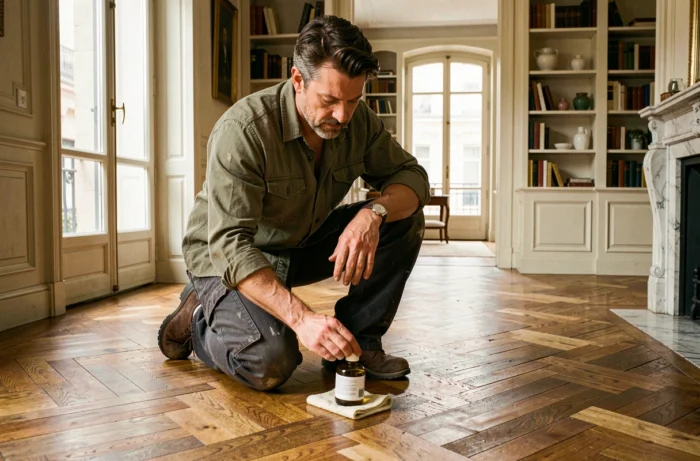
An oiled hardwood floor needs a maintenance coat every six to twelve months. A lacquered floor lasts longer but eventually gets scratched, and refinishing it costs more. The initial choice of treatment commits you to a specific maintenance schedule.
Natural stone countertops (granite, marble) need regular water-repellent treatment. Without it, grease or acid stains penetrate the surface and become permanent. A premium material that is poorly maintained ages worse than a standard material that is properly protected.
Furniture and textiles: plan for wear and tear
Upholstery exposed to direct sunlight fades. Positioning sofas perpendicular to windows rather than facing them reduces this fading. For curtains, blackout linings protect both the fabric and the room from heat.
Washable covers, once associated with a utilitarian style, are now available in refined finishes. They let you refresh the look of a sofa without replacing it, supporting the principles of furniture reuse and durability in interior design.
Energy-efficient renovations and decorating: plan both together
Energy regulations are prompting many homeowners, particularly landlords, to consider insulation work or a new heating system. These projects directly affect interior layouts: wall thickness after internal insulation, radiator placement and the positioning of ventilation vents.
Planning the decorating after the energy-efficiency work, not before, avoids having to redo finishes. Installing wallpaper before internal insulation means paying twice for the same work.
Coordinating insulation, ventilation and decorating choices within the same renovation schedule reduces costs and ensures that technical constraints discovered later do not compromise visual harmony. This is a point rarely covered in traditional decorating guides, even though it determines how long any interior design project will last.