
We take a The North Face jacket out of the backpack after a day of walking in the rain, and it holds up. The lining hasn’t shifted, the seams are intact, and the zippers still glide smoothly. This on-the-ground observation, shared by many hikers, partly explains the price displayed on the tag.
But the quality of manufacturing alone does not justify the gap with competing brands. Several structural factors, from the cost of raw materials to the environmental commitments of the parent company, weigh on the final bill.
Technical membranes and R&D costs at The North Face
When comparing two waterproof jackets in a store, the price difference between a generic brand and The North Face often comes down to what you can’t see: the membrane. The Summit Series and Futurelight technology use membranes developed in-house, which are more breathable than standard solutions. Their manufacturing relies on nano-filament processes that are significantly more expensive than a classic coating.
We better understand why The North Face products are expensive when looking at the construction of high-end pieces: multiple panel fusings, welds replacing traditional seams, lightweight zippers. Every detail adds a production step and an additional quality control.
R&D is not limited to jackets. Down jackets, sleeping bags, and tents benefit from the same investment in textile engineering. This development budget, amortized over relatively short runs compared to fast fashion, is reflected in the unit price of each item.
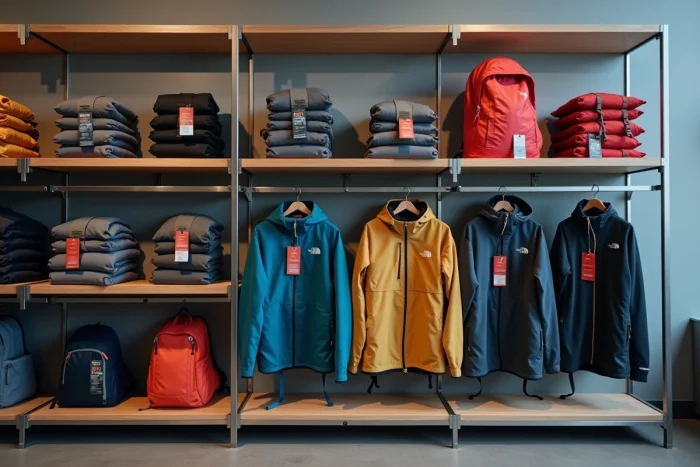
CSR commitments of VF Corporation and rising production costs
The North Face belongs to VF Corporation, a group that has made climate commitments validated by the SBTi (Science Based Targets initiative). Specifically, this means emission reduction targets, an increase in the share of recycled materials, and enhanced traceability throughout the supply chain.
Every audit, every certification, every recycled fiber costs more than the conventional alternative. The recycled polyester used in many of the brand’s pieces requires specific sourcing and additional quality controls compared to virgin polyester.
These additional costs are not trivial. When a brand commits to tracing the origin of its down, certifying its factories, and publishing detailed sustainability reports, it employs dedicated teams and pays third-party organizations. Part of these expenses is passed on to the retail price, which consumers do not always perceive at the time of purchase.
Inflation of raw materials and logistical tensions in the outdoor sector
Since the post-pandemic recovery, the outdoor sector as a whole has faced inflationary pressure on technical raw materials. Quality goose down, Gore-Tex, high-performance synthetic fibers: all these components have seen their prices rise significantly.
- RDS-certified down (Responsible Down Standard) follows a traceability circuit that adds costs at every stage, from farming to filling
- Waterproof-breathable membranes depend on polymers whose prices fluctuate with the petrochemical market
- Maritime transport from Asian factories has experienced sustained price increases following global logistical disruptions
The North Face, like other premium market players (Patagonia, Arc’teryx), absorbs some of these increases but also passes a fraction on to the consumer. Prices do not rise by marketing choice, but by industrial constraint.
Comparison with competing brands
It is often said that The North Face is “too expensive for what it is.” The comparison deserves clarification. In the pure technical segment, Arc’teryx has even higher prices for comparable products. Patagonia falls within the same range, with a similar CSR positioning.
Where the perception of high prices crystallizes is on the brand’s lifestyle products, such as Nuptse jackets or jackets worn in the city. One pays a part of brand notoriety in addition to technical quality. Feedback varies on this point: some users find that durability justifies the investment, while others believe that the quality-price ratio deteriorates in urban ranges.
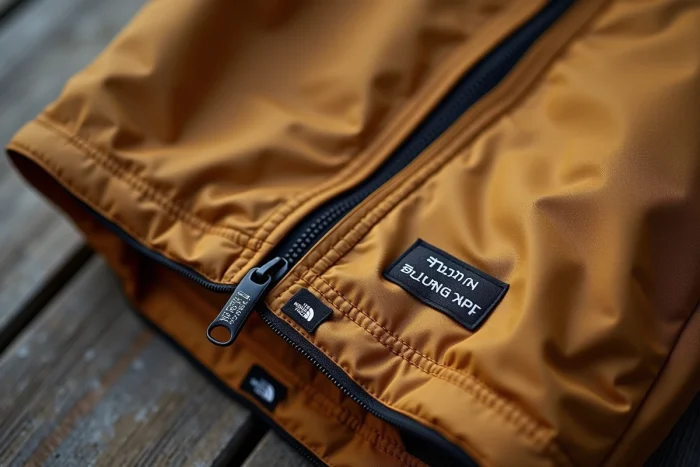
The North Face’s price positioning: technical brand or fashion brand
The paradox of The North Face lies in its dual identity. On one hand, a brand born in California’s alpine culture, an expedition outfitter for high-altitude adventures. On the other, a label massively adopted by the urban market, worn in the subway as much as on the trails.
This duality has a direct effect on pricing policy. The Summit Series collections, designed for mountaineering and ski touring, justify their prices with measurable technical specifications: tear resistance, waterproofness, warmth-to-weight ratio. The lifestyle collections maintain the same price level without offering the same performance, because the perceived value relies on brand image as much as on the product.
For French consumers looking for reliable technical equipment, the question returns to evaluating its actual use. A Summit Series jacket worn on alpine treks several weeks a year amortizes its cost over the years. The same expense for a piece worn occasionally in the city involves a different calculation, closer to fashion purchase than outdoor investment.
The price of a The North Face product reflects an accumulation of industrial, environmental, and commercial factors. The share of each varies according to the range: technical or lifestyle. Before judging a price as too high, it remains relevant to check which line the product belongs to and what one truly expects from it in the field.