
All the skills necessary to establish oneself in graphic design are acquired outside traditional pathways. A diploma has never equated to talent, yet recruiters scrutinize portfolios as closely as they would an aerospace engineer’s CV. In France, the doors to the profession remain wide open, without any official filters, but the selection process occurs elsewhere: based on proof, on the concrete, on results.
Online training platforms are breaking enrollment records every year. In agencies, self-taught individuals sit at the same table as graduates, and no one is surprised anymore. Habits are changing, codes are renewing, but one constant remains: one must convince, visually, through the strength of their achievements.
You may also like : Transform Your Interior with Tips from Concept Déco's Decorator
Why graphic design is so appealing when starting from scratch
It is impossible to reduce graphic design to a mere game of aesthetics. This field attracts due to the balance it imposes between pure creativity, technical mastery, and direct impact on our visual daily lives. Even without an academic background, one finds themselves facing a range of professions: from visual identity to visual communication, from web design to packaging, not to mention motion design or UX/UI. Here, each project is a story to tell, each visual an intention to decipher.
Interest in this sector is also explained by the growing importance of human skills. Today, it is impossible to ignore listening, adaptability, and teamwork. What was considered secondary ten years ago is now scrutinized closely by agencies and clients. Mastery of software is no longer enough: one must understand usage, contexts, and the shifting expectations of the audience.
Read also : Discover the essential brands to boost your business in 2024
Choosing a graphic design training structures a path, even when starting from scratch. These programs allow exploration of every facet of the profession. Here’s what they generally cover:
- developing one’s creativity by organizing their approach,
- acquiring the technical skills useful for each project,
- gaining practical experience with varied achievements.
The sector values the richness of backgrounds. One encounters self-taught individuals, graduates, and hybrid profiles from other spheres. This diversity fuels the appeal of open training programs, where each project becomes a real-world test.
Is a diploma or school really necessary to become a graphic designer today?
The question of the diploma arises regularly. Schools, both public and private, offer programs ranging from BTS to master’s degrees. However, graphic design is not limited to the academic route. Many build their legitimacy through self-training, distance learning, apprenticeships, or VAE (validation of acquired experience), which allows obtaining a recognized certification without following the traditional path.
The portfolio takes precedence over the diploma. Employers and clients focus less on the educational background and more on the ability to demonstrate concrete skills. A solid portfolio, filled with real or fictional projects, makes all the difference. Recognition by peers, field experience, and the ability to deliver completed works weigh heavily in the balance.
The forms of graphic designer training are numerous: online courses, distance learning, programs for career transition or skill enhancement. Meanwhile, nothing replaces field experience: agency missions, independent projects, volunteer actions. These experiences forge versatility, confidence in front of clients, and the ability to collaborate. The professional network matters, but the work presented remains the ultimate judge. Paths intertwine, the diversity of profiles is recognized, and only quality prevails.
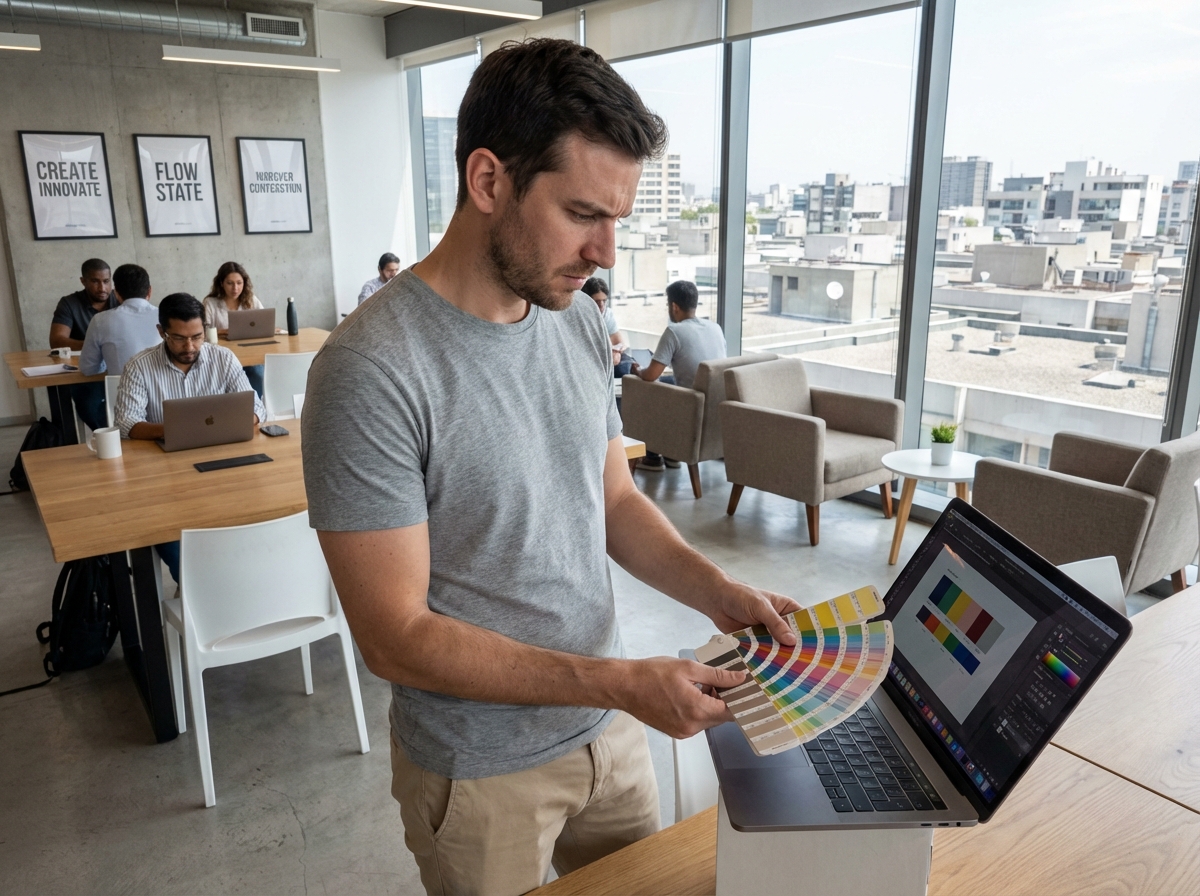
Concrete first steps: tips, resources, and training to get started without hesitation
To equip oneself from the start, it is essential to master the essential tools of the profession. The Adobe suite (Photoshop, Illustrator, InDesign) remains the reference, but Figma and Affinity Designer are carving out their share according to needs. Technique means little without soft skills: knowing how to organize, manage time, accept criticism, and work with others. The daily life of a designer goes far beyond pure creation: it involves communicating with clients, negotiating briefs, and dealing with constraints.
To stand out, it is crucial to build a portfolio even in the absence of paid assignments. One can create this portfolio with fictional projects, volunteer work for associations, or by assisting local young entrepreneurs. Publishing one’s work on Behance or Dribbble helps gain visibility and receive direct feedback on their work. Often, these first steps trigger professional opportunities.
Choosing a legal status determines the next steps in the journey. Micro-enterprise, EURL, SASU: it is up to each individual to compare the tax implications, social coverage, and management flexibility. Regarding setting rates, whether it be daily rates, packages, or royalties, it is important to inform oneself about industry practices. To gain visibility: prospecting, following up with contacts, and maintaining an active presence on social media, every action should be part of a well-thought-out strategy.
For training, there are several programs available: CPF, AIF, France Travail aids, Fispe, or Transitions Pro. Personalized support facilitates skill acquisition, secures project development, and promotes entry into the market. Seeking external advice accelerates progress and prepares one for the realities of the profession.
Graphic design welcomes those who dare to show, test, and revisit their work a hundred times. It is this constant movement, this energy to learn and invent, that paves the way, diploma or not; the field belongs to those who build their own visual signature.